Post-Craniotomy & Tracheostomy Intensive Recovery at Home
Gender
Male
Age
21 Years
Location
Sector F-10, Islamabad
Procedure
Temporal Craniotomy (Tumor Resection) & Tracheostomy
Care Duration
45 days (24/7 Dual Shift Care)
Primary Caregivers
Staff Sayyam Saleem & Staff Nouman
Discharged From
Aga Khan University Hospital, Karachi
Clinical Overview & Initial Presentation
Following a major temporal craniotomy procedure for brain tumor resection at Aga Khan University Hospital, Karachi, 21-year-old Abdullah Tariq was discharged home in a drowsy, highly dependent state requiring meticulous post-operative management, airway care through a tracheostomy, and constant neurological surveillance.
Given the patient's critical requirements, the family engaged eHealth Hospital at Home (eHealthPK) to establish an intensive, hospital-grade home care unit in Islamabad. With round-the-clock shift-based professional nursing, the team ensured continuous monitoring, preventing critical complications while accelerating recovery.
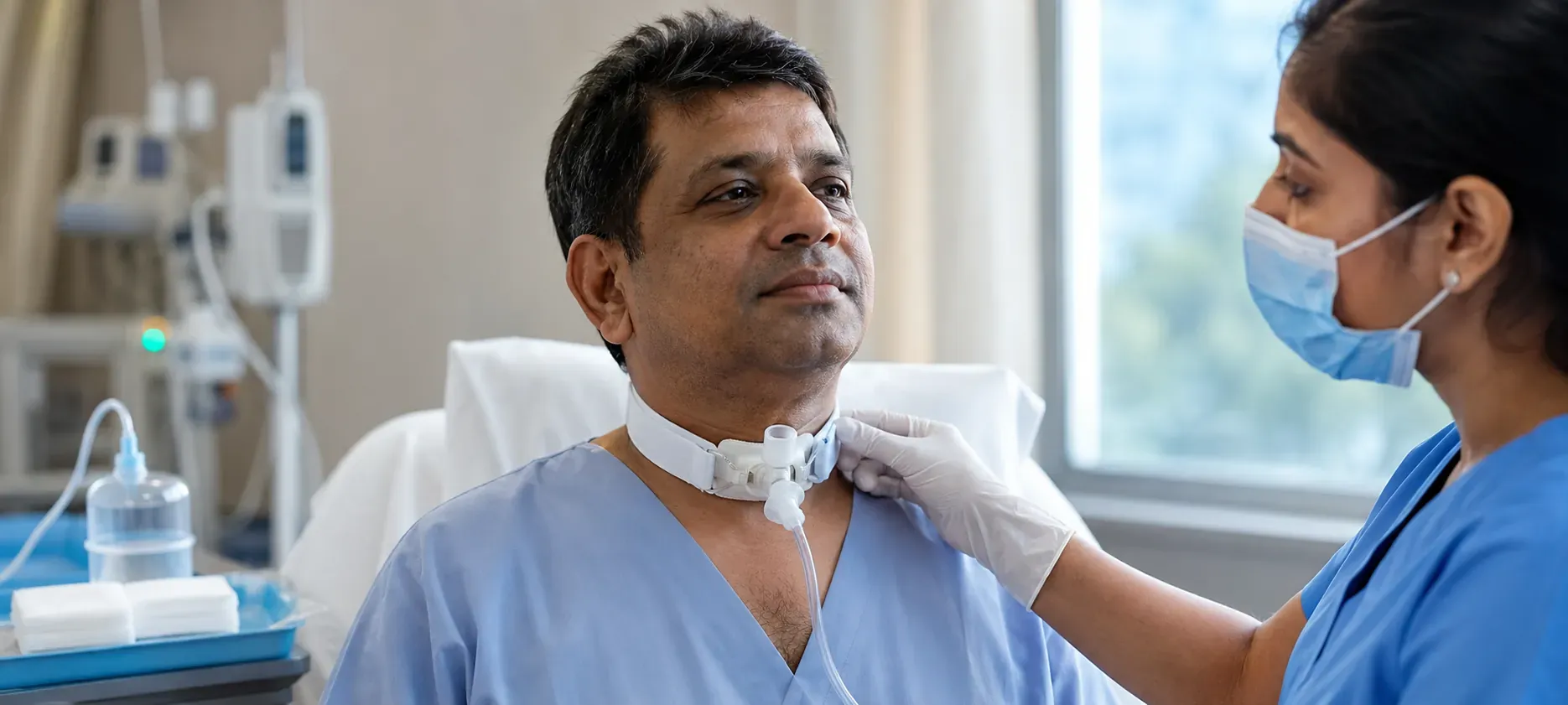
Critical Clinical Challenges Identified
Transitioning an acute neurosurgical patient from a tertiary care center to home demands rigorous clinical safeguards. Our initial clinical assessment identified essential high-risk areas requiring immediate, continuous management.
Care Protocol & Intervention Plan
Specialized Nursing & Clinical Interventions
- Continuous 24/7 Coverage: Round-the-clock 12-hour shifts handled by Staff Sayyam Saleem and Staff Nouman.
- Advanced Airway Management: Regular tracheostomy suctioning, inner cannula cleaning, humidification, and cuff pressure monitoring.
- Neurological Assessment: Routine GCS evaluation, pupil checks, and monitoring for raised intracranial pressure.
- Aseptic Cranial Wound Care: Sterile dressing changes and surgical suture/staple site monitoring.
- Preventative Nursing: Regular position turning, pressure ulcer prevention, and passive limb mobilization.
Phase-Wise Recovery Milestones
- Week 1–2 (Stabilization): Airway optimization, infection prevention, and stabilization of sleep-wake cycles.
- Week 3–4 (Neuro-Rehabilitation): Improved alertness, reduction in drowsiness, and initial speech/physiotherapy.
- Week 5–6 (Decannulation Readiness): Successful tracheostomy weaning assessment and enhanced mobility.
Weekly Recovery Timeline
Tracking the patient's neurological stabilization, airway recovery, and cognitive progression step by step.
Week 1: High-Dependency Stabilization
- Seamless transition to 12+12 hour dedicated nursing shifts
- Established strict aseptic airway and suctioning protocols
- Stabilized medication scheduling and enteral feeding routine
- Continuous vitals and cranial incision site monitoring
Week 2: Arousal & Infection Control
- Marked reduction in excessive post-operative drowsiness
- Consistent GCS improvements and enhanced responsiveness
- Absence of secondary respiratory or surgical site infections
- Commencement of bedside physical therapy
Week 3–4: Rehabilitation & Tolerance
- Patient tolerated prolonged periods of sitting and head elevation
- Consistent improvement in spontaneous verbal and non-verbal cues
- Tracheostomy secretion volumes decreased significantly
- Active assisted extremity exercises initiated
Week 5–6: Weaning & Discharge Preparation
- Preparation for clinical tracheostomy decannulation evaluation
- Substantial return of cognitive awareness and alertness
- Family trained on ongoing supportive routines and nutrition
- Safe transition to intermediate maintenance home care
Clinical Outcomes & Milestones
Through structured, 24/7 high-dependency nursing provided by Staff Sayyam and Staff Nouman, Abdullah achieved remarkable neurological and respiratory progress with zero hospital readmissions or secondary complications.
Airway Stability & Safety
Maintained clear airway patency and optimal oxygenation throughout care without respiratory compromise.
Zero Post-Operative Infections
Complete surgical incision healing and clean tracheostomy site maintained under strict aseptic care.
Neurological Improvement
Significant progress from prolonged drowsiness to alert responsiveness and purposeful interaction.
Seamless Family Relief
Relieved intense familial strain through skilled 12+12 hour shifts, ensuring continuous patient safety.
Family Experience & Testimonial
Reflections from the family on managing intensive post-brain surgery care at home.
Family Testimonial
Bringing Abdullah home after brain surgery at Aga Khan Hospital was overwhelming, but the eHealthPK team turned our home into a fully managed ICU setup. Staff Sayyam and Staff Nouman took exceptional care of him around the clock.
Compassionate Professionalism
The constant diligence in handling his tracheostomy suctioning and neurological needs gave our family immense confidence and peace of mind through the most difficult days.
Key Success Factors
Core operational and clinical standards that made this intensive home recovery safe and successful.
Skilled Neuro-Care Nursing
Proficient handling of craniotomy recovery and invasive tracheostomy care.
Unbroken 24/7 Coverage
Disciplined 12+12 hour shift management ensuring patient observation never lapsed.
Family Integration
Close communication with family members and continuous clinical reporting.
Strict Infection Control
Hospital-grade sterile techniques implemented in a private home environment.
Why Choose eHealth Hospital at Home?
This case demonstrates our capability to manage complex, high-dependency post-surgical cases at home. eHealthPK provides clinical hospital-level care for patients across Islamabad.
Service Areas in Islamabad
We provide high-dependency home healthcare and specialized nursing across major Islamabad sectors, including:
Every Patient is Family at eHealthPK
We don't just provide medical services—we build relationships, offer emotional support, and celebrate every milestone with our patients and their families.
Loading comments...