What is Smart Healthcare? Revolutionizing Medicine in Pakistan and Beyond
Explore smart healthcare and how it’s transforming medicine in Pakistan and worldwide.
Introduction
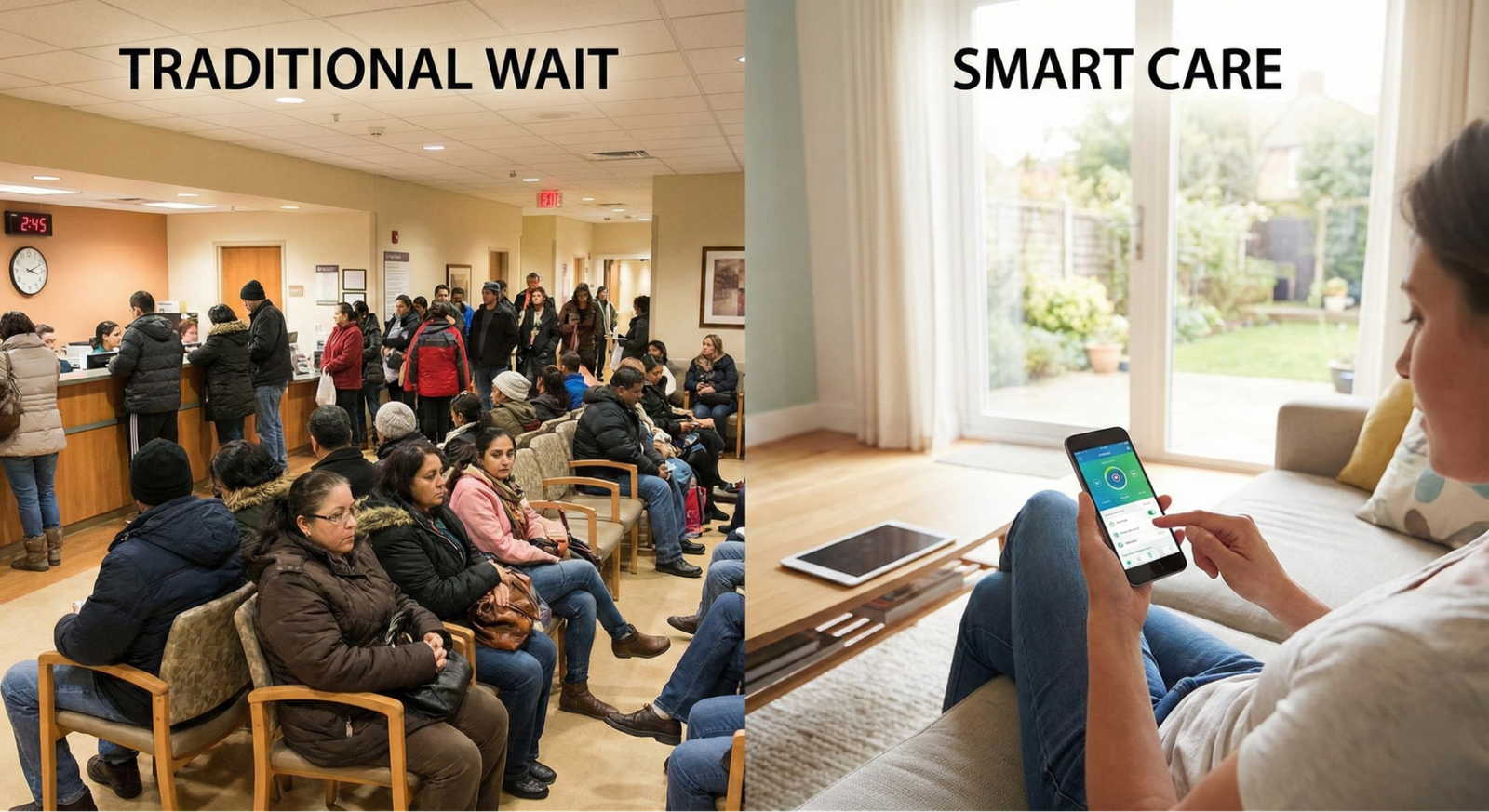
We have all faced the frustrations of traditional medical care. You sit in a crowded hospital waiting room for hours, struggle to gather old paper prescriptions, or wait weeks for a specialist appointment. These challenges create stress and delay necessary treatment. Fortunately, technology is changing this narrative.
Enter Smart Healthcare. This modern approach uses technology to make medical care faster, easier, and more accurate. It connects patients with doctors through the internet and devices, removing physical barriers to care. Whether you are in a bustling city or a remote village, technology is transforming how we manage health globally and right here in Pakistan.
What is Smart Healthcare? (Definition & Overview)
Smart Healthcare is the intersection of medical care and advanced information technology. It involves using digital tools to collect health data, connect patients with providers, and improve medical outcomes. Instead of waiting for a sickness to get worse, smart systems help track health proactively.
Here are the main components that make this system work:
- IoT Devices: Internet-connected medical devices that share data instantly between patients and hospitals.
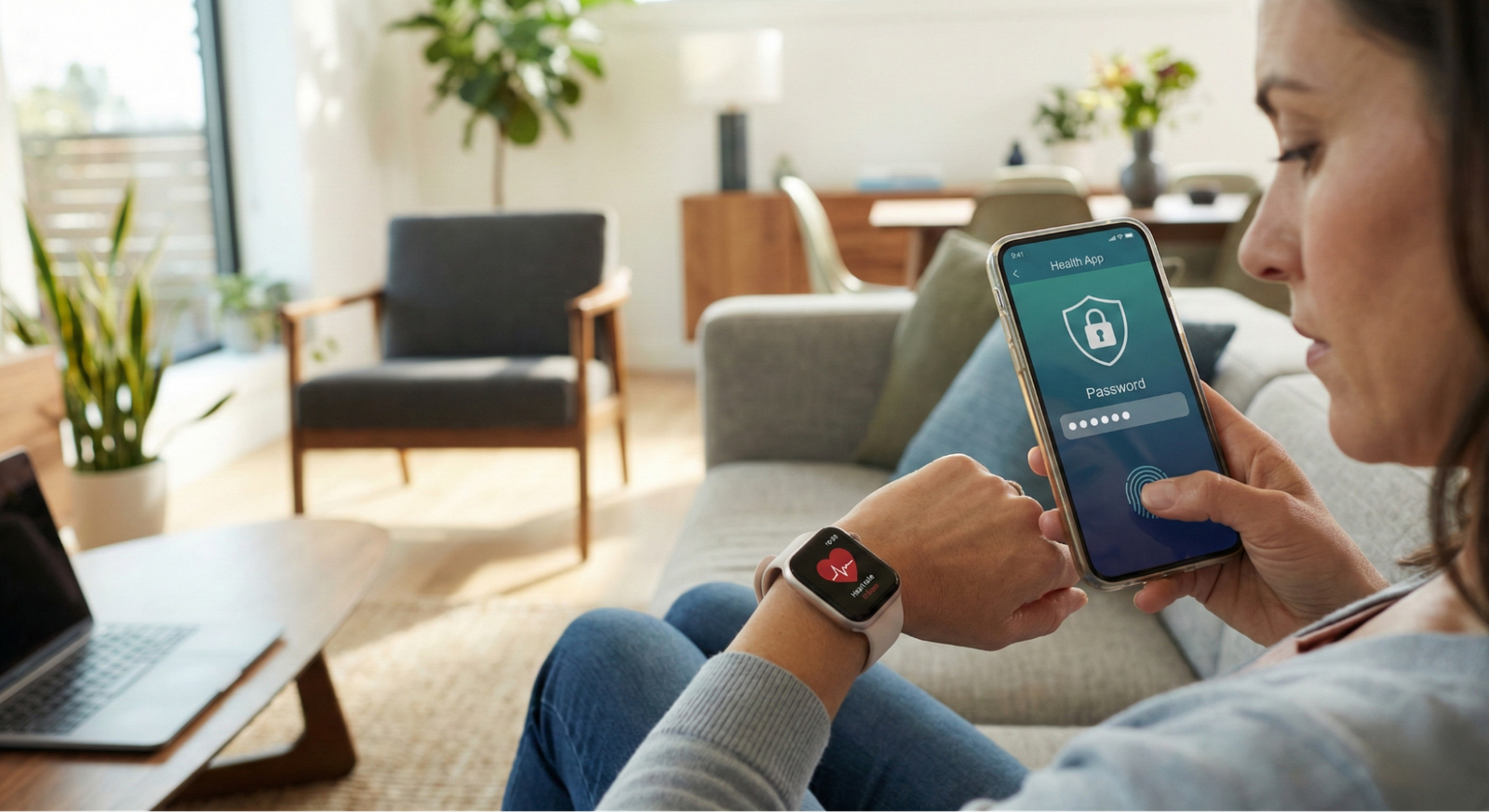
- Wearable Tech: Gadgets like smartwatches and fitness bands that track heart rate, steps, sleep patterns, and oxygen levels.
- Artificial Intelligence (AI): Advanced software that analyzes health data to assist in early diagnosis and health predictions.
- Telemedicine: The ability to consult a doctor via video call from the comfort of your home.
- Cloud Health Records: Secure digital storage of patient history, reducing the risk of lost files and fragmented data.
- Data Analytics: Systems that identify health trends across populations to predict risks and prevent outbreaks.

Key Features and Benefits of Smart Healthcare
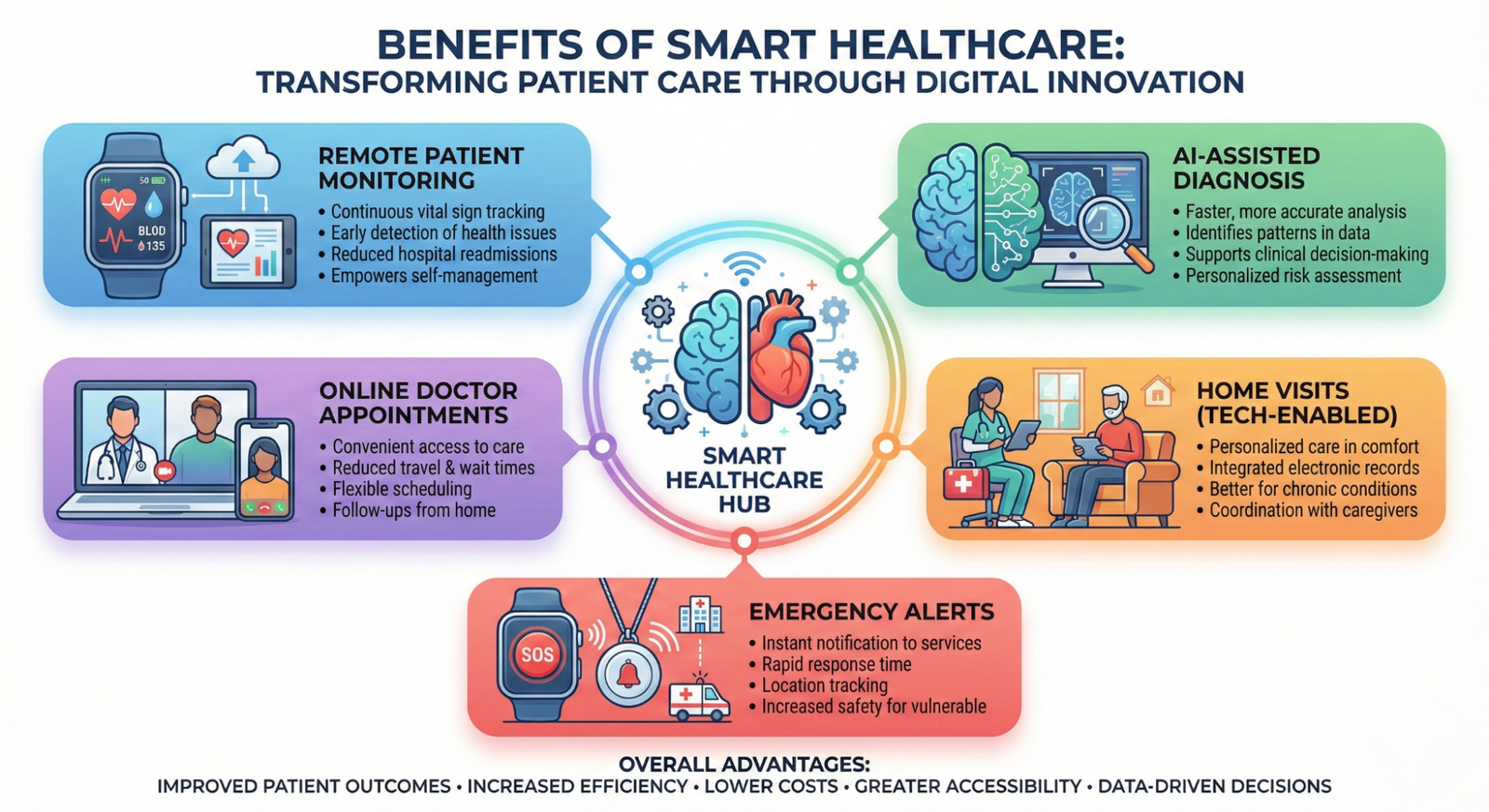
Adopting digital health solutions offers massive advantages over traditional methods. Here is why it matters:
- Remote Monitoring: Doctors can track patient health without a hospital admission. Apps send vitals directly to clinics, keeping chronic conditions in check.
- Faster Diagnosis: AI in healthcare scans X-rays, labs, and test results quickly, highlighting issues for doctors to review immediately.
- Personalized Treatment: Detailed health data analysis allows doctors to create custom treatment plans based on a patient's specific history.
- Reduced Costs: Fewer unnecessary hospital visits and better prevention strategies help save money for families.
- Better Emergency Response: Smart devices can detect falls or heart irregularities and alert medical services automatically.
- Online Appointments & Home Visits: Platforms like eHealthPK allow patients to book doctors online easily or arrange for professional home visits, bridging the gap between convenience and care.
How Smart Healthcare Works
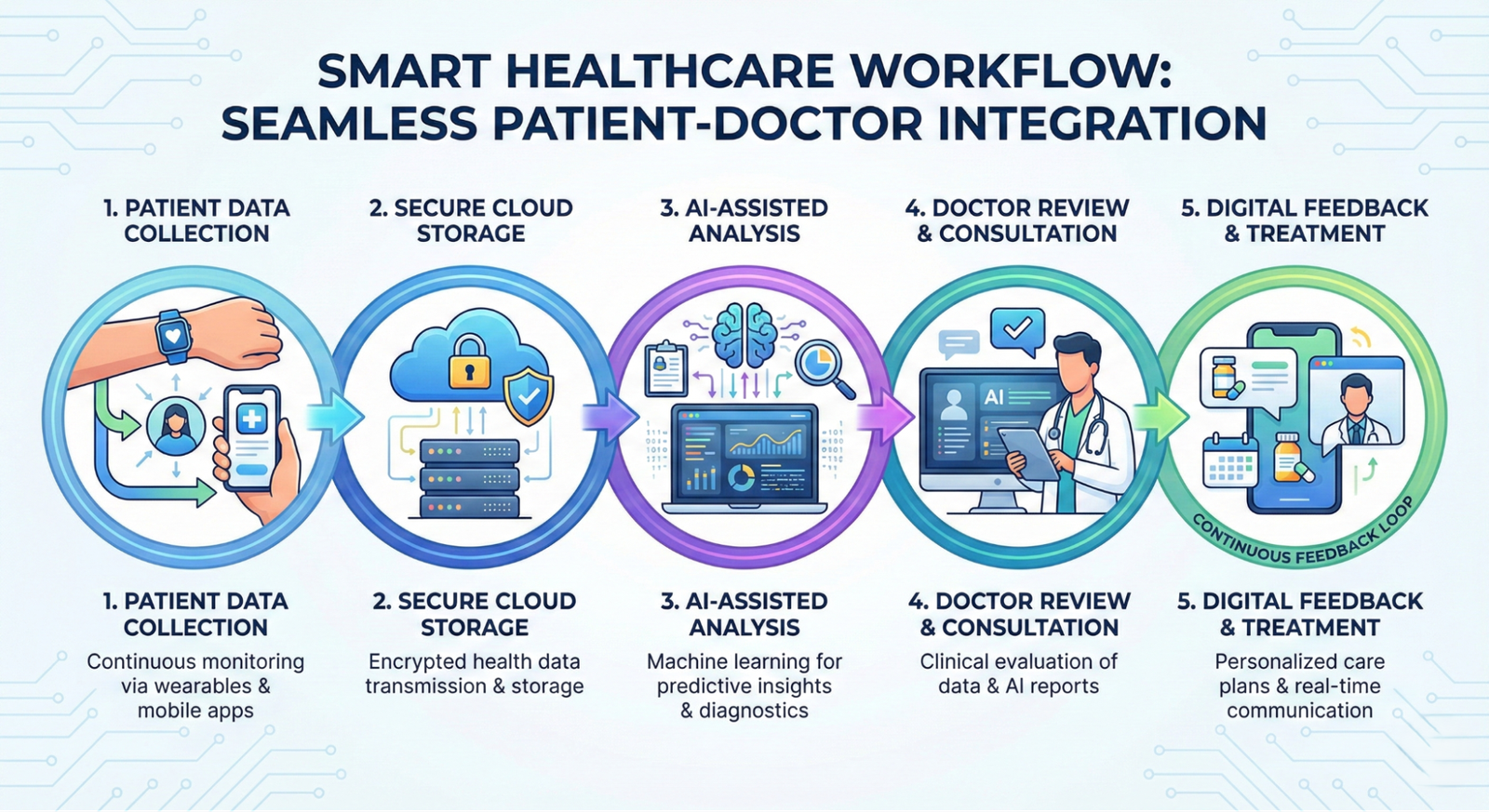
Understanding the workflow helps remove the mystery behind the technology. Generally, it follows a simple cycle:
- Data Collection: Wearable tech or sensors record health information, such as blood pressure, glucose levels, or heart rate.
- Data Transmission: This information is securely sent via the internet to a cloud system or hospital database.
- Analysis: AI or medical staff review the incoming data to look for anomalies or warning signs.
- Feedback: Doctors provide digital prescriptions, medical advice, or request an in-person visit if necessary.
Real-world Example:
Imagine a heart patient living in Lahore. They wear a specialized monitor that tracks their cardiac rhythm. This device sends data to a specialist based in Karachi. If the system detects an irregularity, the doctor in Karachi is alerted instantly and contacts the patient to adjust their medication or head to a hospital.
Smart Healthcare in Pakistan
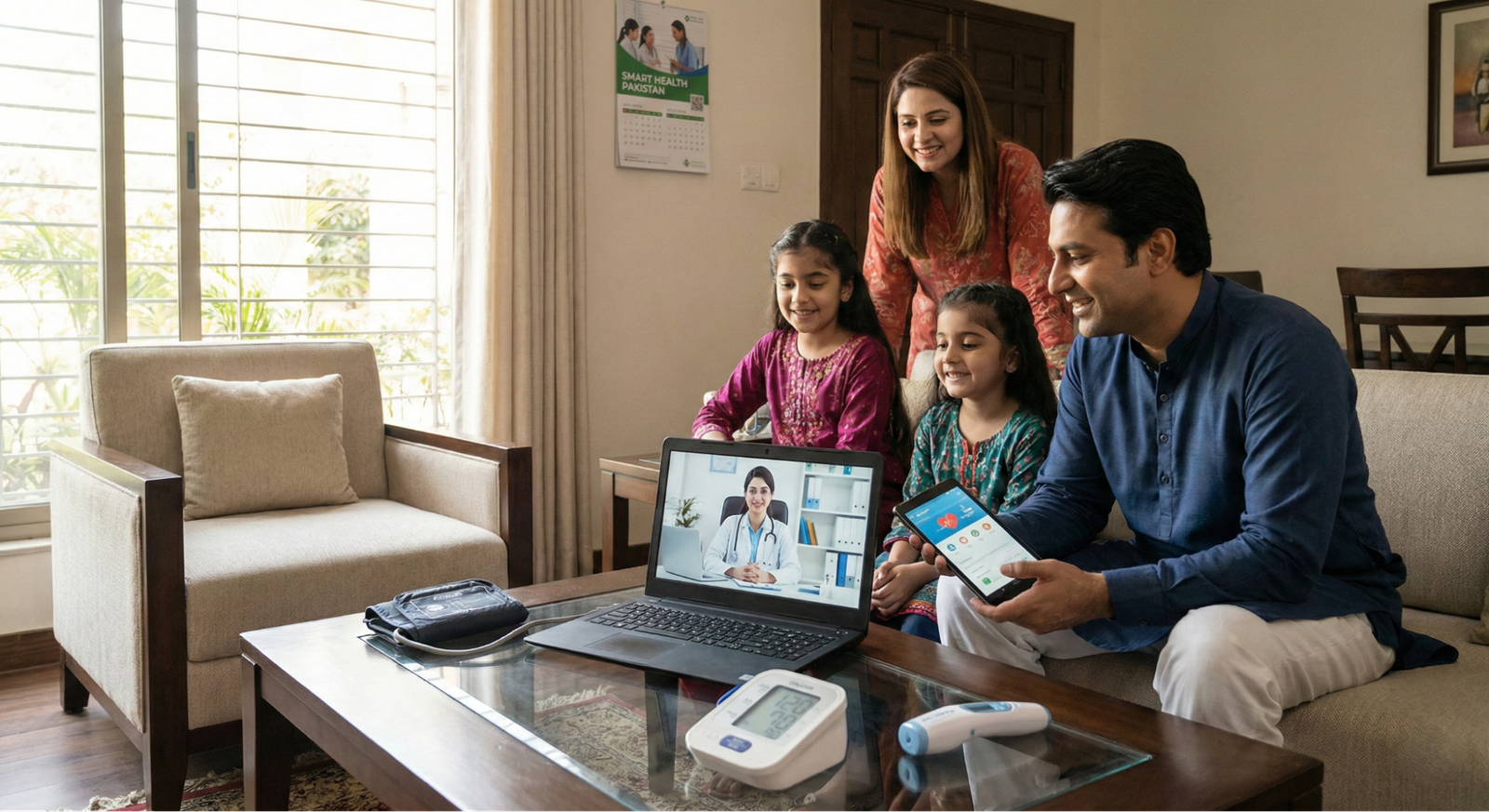
The landscape of digital health in Pakistan is evolving rapidly. With increased internet access and smartphone usage, more people are turning to technology for their medical needs. However, challenges remain, such as internet connectivity in rural areas and general awareness.
Despite these hurdles, the adoption of healthcare technology is growing. eHealth in Pakistan is becoming a vital service, offering reliable solutions for those who cannot easily travel to major hospitals.
Common services now available include:
- Telemedicine: Video consultations with specialists.
- Health Monitoring Apps: Tracking daily fitness and vitals.
- Digital Prescriptions: Receiving medicine orders via SMS or email.
- Home Care Coordination: Booking nurses or doctors for home visits through digital platforms.
Platforms like eHealthPK serve as reliable tools in this ecosystem, connecting patients with verified healthcare professionals and simplifying the journey to wellness. These advancements highlight the growing smart healthcare benefits for the local population.
Tips for Using Smart Healthcare Safely and Effective
While technology is helpful, it is important to use it responsibly. Here is how to stay safe:
- Protect Your Data: Always use strong, unique passwords for your health apps and medical devices.
- Check Credentials: Ensure the doctors and platforms you use are licensed and verified.
- Use Certified Devices: Only rely on medically approved wearables or sensors for critical health tracking.
- Back It Up: While cloud storage is great, keeping a hard copy or a secondary digital backup of your records is wise for emergencies.
Conclusion
Smart Healthcare is more than just a buzzword; it is a revolution in how we treat and prevent illness. By combining healthcare technology with human expertise, we are moving toward a future where medical care is accessible to everyone, regardless of location.
From remote monitoring to convenient online appointments, these tools improve health outcomes and provide peace of mind. Platforms like eHealthPK are playing a significant role in this shift, making it easier than ever to manage your well-being. Embracing these digital tools today ensures a healthier, safer tomorrow.
For more guidance on getting ready for a medical consultation at home, check out our detailed guide on How to Prepare for Your First In-Home Doctor Visit in Pakistan.
@All images in this blog are sourced from Wallpezia