Ways to Make This Your Healthiest Ramadan: A Comprehensive Guide
Discover practical tips for a healthy Ramadan with nutrition, hydration, and wellness guidance.

Ramadan is a blessed month of spiritual reflection, self-discipline, and community. However, for many in Pakistan, the sudden change in eating and sleeping patterns can lead to physical fatigue, dehydration, and nutritional imbalances. Transitioning from three regular meals to a fasting window of over 14 hours requires a strategic approach to maintain your energy and well-being.
In this guide, we will explore practical ways to make this your healthiest Ramadan yet. You will learn how to balance your nutrition, stay hydrated in the changing weather, and use modern digital tools to keep your health on track.
For personalized medical guidance before you start your fast, you can consult with expert doctors through How Can I Book an Online Doctor Consultation Through eHealth Services?
1. Plan a Balanced Suhoor and Iftar
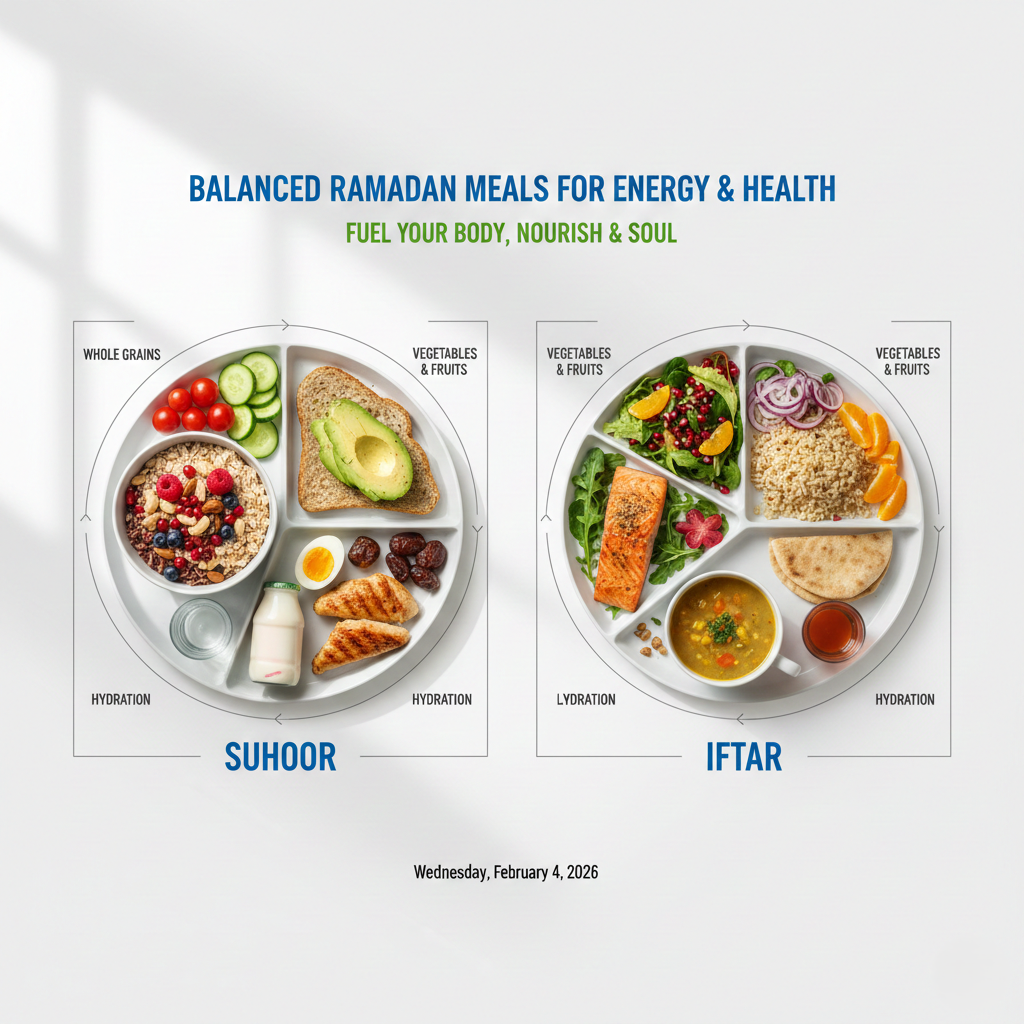
A healthy Ramadan begins with what you put on your plate. Instead of focusing on quantity, focus on the quality of nutrients to ensure sustained energy throughout the day.
The Power of Suhoor
Suhoor is the most important meal for a faster. To avoid mid-day energy crashes, prioritize complex carbohydrates and high-fiber foods.
- Examples: Whole-grain bread (Lal Atta), oats, barley, and yogurt.
- Protein: Include eggs or lean meat to keep you feeling full for longer.
A Mindful Iftar
Breaking your fast should be a gradual process. Start with 1–2 dates and water to restore blood sugar levels immediately.
- The Main Plate: Ensure half your plate is filled with salad or grilled vegetables, one-quarter with protein (chicken, fish, or lentils), and one-quarter with healthy carbs.
Need vitamins or health supplements? Check out Which Online Pharmacies Deliver Medicines Across Pakistan?
2. Stay Hydrated Throughout the Day
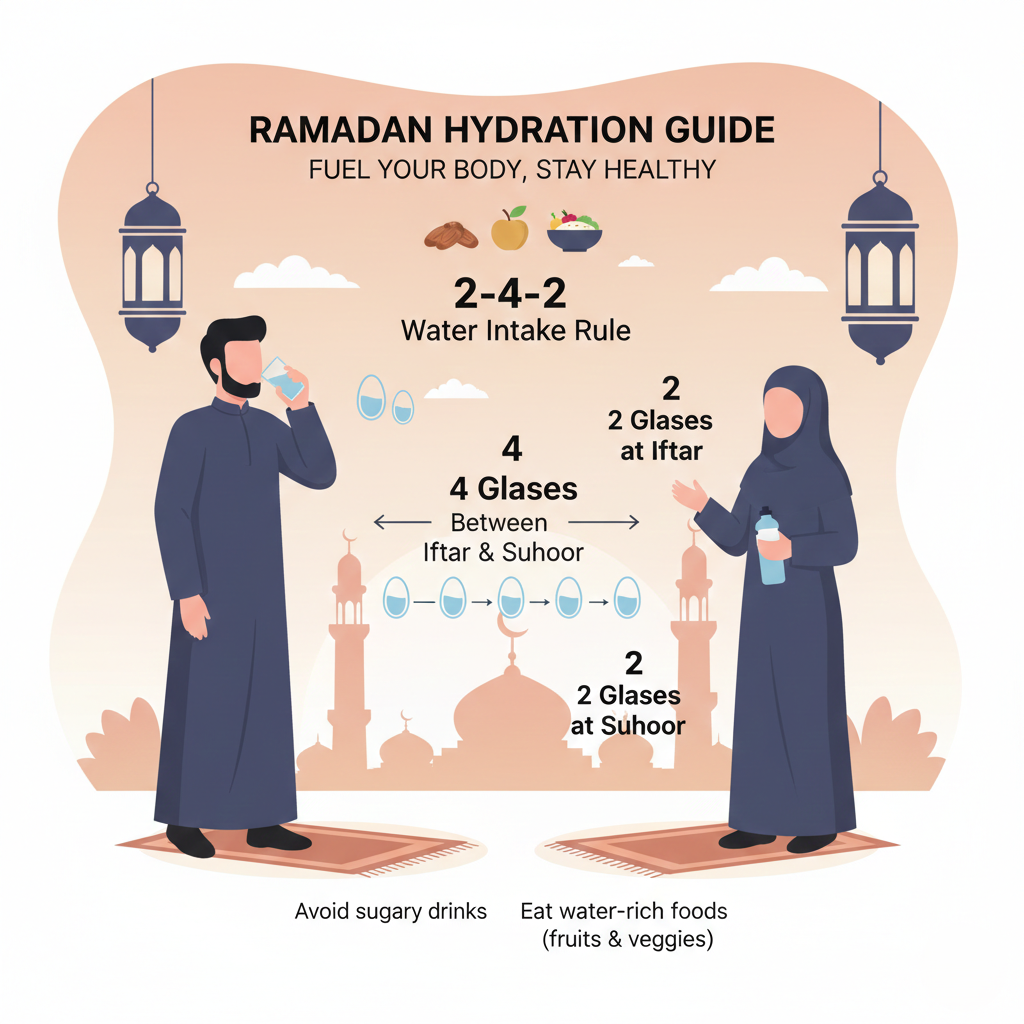
In Pakistan’s climate, dehydration is a significant risk during Ramadan. Since you cannot drink during the day, you must optimize your intake between Iftar and Suhoor.
The "8-Glass" Strategy
Don't try to chug all your water at once. Use the 2-4-2 rule:
- 2 glasses at Iftar.
- 4 glasses spread out between Iftar and bedtime.
- 2 glasses during Suhoor.
Avoid Dehydrating Triggers
Limit caffeine (tea and coffee) as it acts as a diuretic, causing your body to lose water faster. Instead, opt for hydrating foods like cucumbers, watermelon, and coconut water.
3. Include Moderate Exercise
Fasting is not a reason to stop moving. While you should avoid high-intensity workouts while fasting, moderate activity is essential to keep your metabolism active and prevent lethargy.
- Best Timing: The best time to exercise is roughly 1–2 hours after Iftar or an hour before Suhoor.
- Low-Impact Ideas: A 20-minute brisk walk, light stretching, or yoga.
- Safety Tip: If you feel dizzy or lightheaded, stop immediately. Focus on "movement for maintenance" rather than "movement for weight loss."

4. Monitor Your Health with eHealth Services
Managing chronic conditions like diabetes or hypertension during Ramadan requires extra care. Fortunately, digital health solutions in Pakistan now make it easier than ever to stay safe.
Leverage Telemedicine
If you notice unusual fluctuations in your blood sugar or blood pressure, don't wait until the end of the month. Use eHealth platforms to get immediate advice from the comfort of your home.
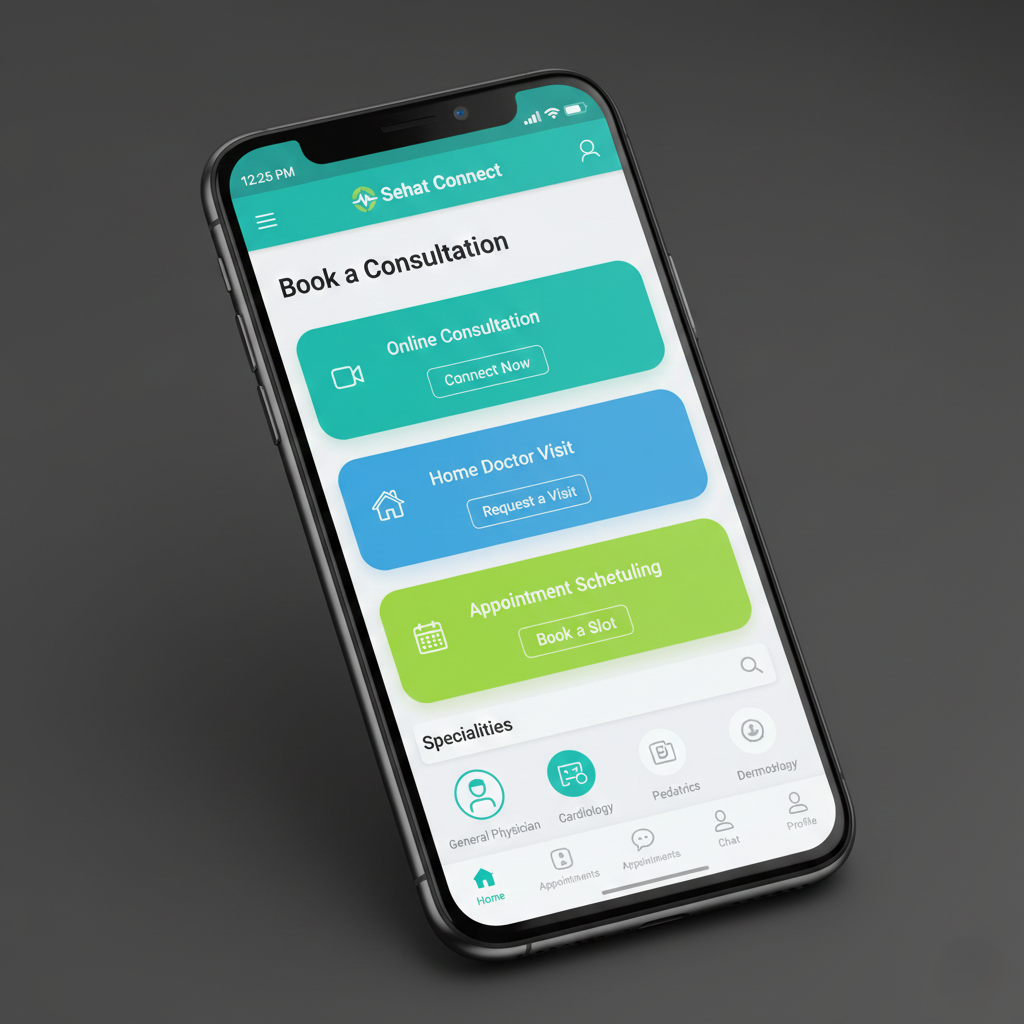
- Online Consultations: Get professional advice on adjusting medication timings.
- Home Visits: For elderly family members, professional medical check-ups can be conducted at home.
Internal Resources:
- How Can I Book an Online Doctor Consultation in Pakistan?
- What Are the Best Doctor-at-Home Services in Pakistan?
- Doctor Home Visits vs Telemedicine in Pakistan: Which One Should You Choose?
5. Avoid Overeating and Monitor Sugar Intake
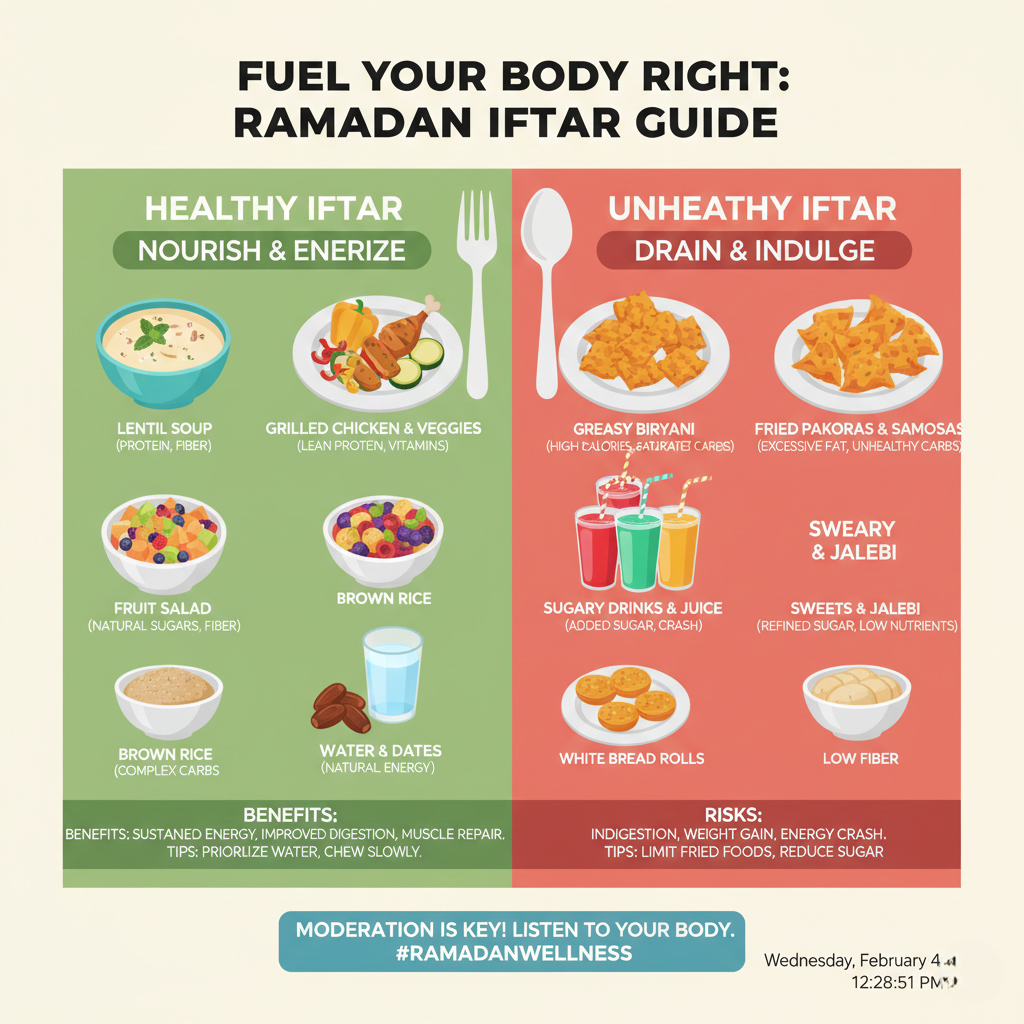
The tradition of "Iftar parties" often involves heavy, oil-laden snacks like pakoras, samosas, and sugary drinks. Overindulgence leads to weight gain and digestive issues.
Smart Swaps for a Healthy Ramadan Diet:
- Instead of Deep Frying: Air-fry or bake your snacks.
- Instead of Sugary Rooh Afza/Juices: Try fresh lemonade or plain lassi without added sugar.
- Portion Control: Use a smaller plate to prevent overeating during the "hunger rush" at sunset.
6. Prioritize Sleep and Mental Wellbeing
With late-night prayers (Taraweeh) and early Suhoor, sleep cycles are often disrupted. Lack of sleep affects your hunger hormones, making it harder to resist unhealthy food.
- The Power Nap: Take a 30-minute nap in the afternoon to recharge.
- Digital Detox: Avoid screens at least 30 minutes before your scheduled sleep time.
- Mindfulness: Dedicate time for meditation or quiet dhikr to reduce stress levels and improve mental clarity.

Conclusion: A Holistically Healthy Ramadan
Making this your healthiest Ramadan is about balance. By focusing on nutritious meals, consistent hydration, and moderate movement, you can ensure your body stays as strong as your spirit. Don't forget to listen to your body—monitoring your health through modern digital tools is a vital part of a responsible fasting routine.
If you feel unwell or need a routine check-up, remember that eHealth is a convenient option for doctor consultations and home visits across Pakistan. Stay safe, stay healthy, and Ramadan Mubarak!
@All images in this blog are sourced from Wallpezia